
Equity benchmarks Sensex and Nifty faced heavy drubbing on Thursday, falling over 1 per cent each, in tandem with weak global markets following the US Federal Reserve's interest rate hike and its hawkish stance. The 30-share BSE Sensex tanked 878.88 points or 1.40 per cent to settle at 61,799.03. During the day, it tumbled 962.3 points or 1.53 per cent to 61,715.61.

As common people grope for means to counter the ever-increasing prices of essential commodities, the economists and financial analysts fear that the recent hike in fuel prices would soon push inflation past 9 per cent. In an interview to rediff.com's special correspondent A Ganesh Nadar, Economic advisor to the Tata group Siddhartha Roy, shared his thoughts on the vexing issue of India's inflation.

Investors' wealth tumbled over Rs 5.78 lakh crore in two days of market fall amid a weak trend in global markets after a host of central banks hiked interest rates and gave hawkish commentary. The 30-share BSE Sensex declined 461.22 points or 0.75 per cent to settle at 61,337.81 on Friday. In the previous trade, the BSE benchmark had tanked 878.88 points or 1.40 per cent to settle at 61,799.03.
Crude oil is not the only commodity seeing a price correction on fears of an economic slowdown. The same sentiment is driving prices of a range of important industrial metals like copper, zinc, aluminum and the precious metal gold. As a result, prices are now below what they were three months ago.

Mixed earnings and not so encouraging macroeconomic data dented sentiment, Ajit Mishra, VP - Research, Religare Broking Ltd said. In twin blows to Indian economic revival, higher food prices drove retail inflation to a five-month high of 7.4 per cent, while factory output fell for the first time in 18 months. The second consecutive month of rise in consumer price index (CPI)-based inflation will add to the pressure on the Reserve Bank of India (RBI) to again raise interest rates to tame high prices. In the broader market, BSE Midcap declined 0.73 per cent while smallcap dropped 0.45 per cent.

With hotels and restaurants being barred from levying service charge, waiters, chefs and other workers are worried they will lose out on money and are planning to approach managements to seek a pay raise. They are also apprehensive that tips given by customers out of goodwill will dwindle. Uttarakhand-native Prakash Singh Koranga, 27, a chef who works at an outlet of popular franchise Moti Mahal Deluxe restaurant in south Delhi, said service charge which gets proportionally divided among the staff acts as an "extra income" and "incentive to give our best at the job".

Equity investors became poorer by Rs 7.48 lakh crore in five consecutive days of market fall, where the BSE Sensex has declined by nearly 3 per cent. In the past five days, the BSE Sensex has tumbled 1,713.71 points or 2.79 per cent. This has led to an erosion of Rs 7,48,887.04 crore from the market capitalisation of BSE-listed firms in five trading sessions.

'The Indian economy and the Indian financial sector today remain resilient and much better placed.'
Banks and Capital Goods scrips among the top losers in noon deals.
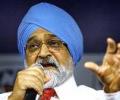
The Planning Commission on Saturday sought to play down fears that the hike in excise duty on petroleum products would lead to a surge in inflation.

The inflation data for May and the US Fed interest rate decision are the crucial factors that would dictate terms in the equity market this week, analysts said. Moreover, foreign fund trading activity, movement of rupee and crude oil prices would be the other key monitarables for the markets, they added. "All eyes will be on the US FOMC (Federal Open Market Committee) decision scheduled on June 15, and the market is fearing aggressive rate hikes amid inflation monster. "Bank of Japan will also announce its credit policy on June 17.
Domestic equity investors' wealth eroded by more than Rs 4.43 lakh crore on Monday as fears of a financial contagion triggered by one of the biggest bank failures in the US roiled market sentiments. After a strong opening, Indian stocks went into a tailspin with the benchmark 30-share BSE Sensex tumbling nearly 900 points to close at 58,237.85 points -- sliding for the third straight trading session. The NSE Nifty too declined 258.60 points to end at 17,154.30 points.

'Market feels this Budget will promote all-round growth and that is what is giving it confidence.'

The RBI has targeted consumer price inflation at 6 per cent by January and 4 per cent by March 2018.

Taxing the rich will fetch nothing; only votes, argues Debashis Basu.

Among the Sensex firms, ITC, Tata Consultancy Services, Wipro, Asian Paints, HCL Technologies, HDFC, Kotak Mahindra Bank, Bajaj Finance, Infosys, Sun Pharma, Hindustan Unilever, Power Grid, Reliance Industries and HDFC Bank were the winners. HCL Technologies climbed 1 per cent after the company on Thursday posted a 10.85 per cent increase in consolidated net profit to Rs 3,983 crore for the fourth quarter of 2022-23. Tech Mahindra, Maruti, Tata Steel, UltraTech Cement, Tata Motors and ICICI Bank were among the laggards.

Equity benchmark Sensex ended marginally higher after a choppy session on Friday as concerns over the economic impact of the second wave of Covid-19 and pace of vaccination weighed on investor sentiment.

The government should not go in for an 'aggressive fiscal consolidation' in the upcoming Budget as global risks have not abated, RBI Monetary Policy Committee (MPC) Member Ashima Goyal said on Wednesday. Goyal further said subsidies are expected to come down as food and energy inflation moderates. WPI inflation in food articles in November was 1.07 per cent against 8.33 per cent in the previous month.
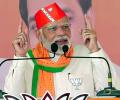
Congress spokesperson Abhishek Manu Singhvi cited a viral video on social media platforms, claiming that in it Modi's voice is heard in a call with BJP rebel Kripal Parmar.

What's different this time is that global financial stress -- which has its genesis in four policy choices made in recent years -- is juxtaposed with a more resilient real economy, observes Sajjid Z Chinoy, chief India economist at J P Morgan.

As markets complete the first half of the calendar year 2022 (CY22) with a fall of around 9 per cent, the interest-rate hike trajectory by global central banks, paired with the conundrum of inflation and growth, will move the needle for the market, observe experts. Here's a quick rundown on what they'll react to over the next six months.

'While most companies were bullish before the second wave of double-digit sales growth in FY22, that may not be the case now.'

'The BJP, already falling short of a strong OBC leader from Maharashtra, will be more than happy to welcome Chhagan Bhujbal in its fold.'

The committee has also recommended highlighting 'Hindu victories' in various battles in the textbooks.
The 'Ban Raj' is back. In an effort to rein in rising inflation, the Centre has banned export of all edible oils from the country.

'Returns can be very variable in equity markets.' 'That is why I tell small investors don't put 100 per cent of your money in equities, even if you are young.'

He warned low interest rates globally could distort markets and would be difficult to abandon

'You must have heard that Pakistan is going bankrupt or that a default or meltdown is taking place. It (default) has already taken place. We are living in a bankrupt country,' Defence minister Khawaja Asif said.

Reserve Bank governor Shaktikanta Das on Friday cautioned banks against any build-up of asset-liability mismatches, saying both are detrimental to financial stability and hinted that the ongoing crisis in the US banking system seems to have emanated from such mismatches. Delivering the annual KP Hormis (Federal Bank founder) commemorative lecture in Kochi this evening, the governor was quick to acknowledge and assure that the domestic financial sector is stable and the worst of inflation is behind us. Amid the continuing volatility in exchange rates, especially due to the excessive appreciation of the US dollar, and its impact on the external debt servicing ability of nations, Das said, "We have nothing to fear as our external debt is manageable and thus appreciation of the greenback does not pose any problem to us."
Wipro, Power Grid, Larsen & Toubro, Mahindra & Mahindra, Tech Mahindra, NTPC, Titan, Tata Consultancy Services and HCL Technologies were among the other major winners. Bajaj Finance, IndusInd Bank, Asian Paints, Hindustan Unilever, Axis Bank, ICICI Bank, Reliance Industries and HDFC Bank were among the laggards.

Despite the narrowing spread of yields between the benchmark 10-year Indian government bond and the 10-year US Treasury bond, foreign portfolio investors (FPIs) are continuing to invest in the domestic debt market this year -- a trend backed by a stable currency and a less volatile bond market. FPIs have been net buyers in the debt market in 2023 so far, marking the first time since 2019. The yield spread between the 10-year Indian government bond and the 10-year US Treasury note stood at 3.14 per cent on August 8 - the narrowest in over a decade.
Flexibly targeting inflation is consistent with a demand stimulus, says Ashima Goyal.

Already retail inflation has risen to 6.07 per cent in February, crossing the upper band of the Parliamentary mandate. This is the second consecutive month in 2022 when retail inflation has crossed the 6 per cent mark having hit 6.01 per cent in January.

Consumer prices were forecast to have risen 10.00 per cent annually last month, barely changed from the 10.09 per cent clocked in October.

Equity markets would be mainly driven by global trends and foreign fund trading activity in the holiday-shortened week, analysts said. The BSE and the National Stock Exchange have listed March 7 (Tuesday) as a holiday on account of Holi. However, stock brokers' association ANMI has urged the government, exchanges and Sebi to shift the holiday to March 8 from March 7.
India's current account deficit is expected to deteriorate in the current fiscal on account of costlier imports and tepid merchandise exports, according to the Finance Ministry's monthly economic review. The review released on Thursday by the ministry also said that global headwinds would continue to pose a downside risk to growth as crude oil and edibles, which have driven inflation in India, remain major imported components in the consumption basket. For the present, it said, "their global prices have softened, as fears of recession have dampened prices somewhat. This would weaken inflationary pressures in India and rein in inflation."

SBI managing director PK Gupta told reporters that the rupee has been faring better than many of its peers, including the Turkish, Argentinean, and Indonesian currencies.

Forex dealers said besides robust month-end demand for the American currency from oil importers, dollar's strength against its rival currencies on expectations of rising interest rates amid lingering Sino-US trade tensions, weighed on the domestic currency.

Investors have scaled back their allocation to equities as pessimism has reached "dire" levels due to cloudy economic outlook, according to the latest Bank of America (BofA) monthly global fund manager survey that covered nearly 300 money managers with combined assets of $800 billion. The survey showed that the expectations for global growth and profits are at all-time lows and cash levels are at highest since the 9/11 attacks. Interest rate hikes by central banks, the unwinding of an easy monetary regime, disruptions in global supply chains, and fears of recession have heightened market volatility since the beginning of the year.
 © 2026 Rediff.com - Advertise with us - Disclaimer - Privacy Policy - Sitemap - Feedback - About us - Terms of use - Grievances